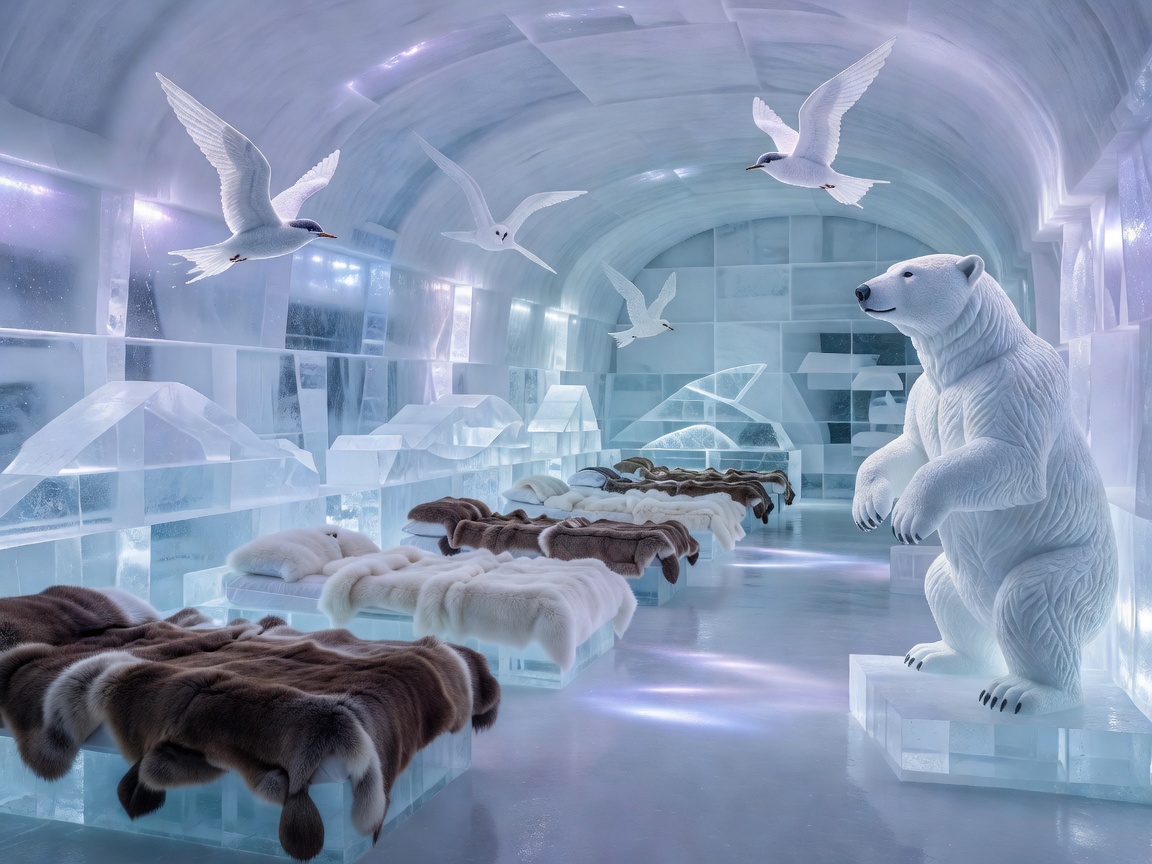
Stepping into a room made entirely of crystal-clear river ice and packed snice (a mixture of snow and ice) is a sensory awakening. The temperature inside ice hotels like Jukkasjärvi in Sweden or Hôtel de Glace in Canada remains steadily held between -5°C and -8°C (23°F to 18°F), regardless of how low the Arctic storm outside drops.
While the visual atmosphere is ethereal with blue light reflecting off hand-sculpted relief walls, surviving the night in complete rest requires specific thermal discipline.
1. Base Layers over Heavy Pajamas
Never wear cotton or heavy outer outerwear into your expedition sleeping bag. Moisture trapped in cotton dampens and rapidly freezes against your skin. Instead, wear a single fitted layer of 100% Merino wool thermals, wool socks, and a lightweight fleece beanie to retain essential head heat.
2. Thermal Mattress Barrier & Reindeer Pelts
Direct contact with ice blocks will sap heat via conduction within 15 minutes. High-grade ice hotels cushion ice frame beds with wooden slatted bases, high-density thermal mattresses, and thick reindeer pelts. The hollow structure of reindeer fur provides one of nature's highest thermal resistance values.
3. Navigating the Expedition Sleeping Bag
You will be provided an Arctic rated sleeping bag rated to -25°C. Before pulling the mummy drawstring closed, place your smartphone and camera batteries inside the foot of the bag. Sub-zero temperatures drain lithium-ion batteries rapidly, but keeping them near your core heat preserves power until morning.